Ökotoxikologie: Algenfressraten von Daphnia magna
Ein wichtiger Marker der Tiergesundheit, bestimmt mit CASY
Prof. Dr. Konstantinos Grintzalis
School of Biotechnology, Dublin City University, Dublin, Irland; School of Biosciences, University of Birmingham, Birmingham, Vereinigtes Königreich
Verkleinerter Fressraten-Assay mit Daphnien für eine wirtschaftliche ökotoxikologische Prüfung
Phänotypische Marker der Tiergesundheit gehören zum Kern der regulatorischen Toxikologie. Der Wasserfloh Daphnia magna ist dabei die Schlüsselart der Süßwasser-Ökotoxikologie, und die Fressrate ein wichtiger Marker für Physiologie und Gesundheit der Tiere. Ein verkleinerter Ansatz braucht weniger Tiere, weniger Medien und Chemikalien und weniger Laborplatz; er lässt sich zudem leichter automatisieren und spart damit erheblich Zeit. Verkleinert man phänotypische Marker bis auf ein einzelnes Tier je Well, lassen sich außerdem weitere Marker messen – etwa Verhaltensantworten – und auf der Ebene des einzelnen Tieres zusammenführen.
Mit einem CASY Zellzähler haben wir einen Test im Mehrfachwell-Format entwickelt, der für verschiedene Chemikalien die gleichen Ergebnisse liefert wie der herkömmliche Aufbau.
Methoden
Nachdem wir den Einfluss von Algenkonzentration, Gesamtvolumen und Tierdichte untersucht hatten, haben wir mit diesem verkleinerten Test gezeigt, wie sich Metalle auf die Fressaktivität der Daphnien auswirken.
Die Daphnien werden für eine festgelegte Dauer Chemikalien oder Schadstoffen ausgesetzt. Eine Algensuspension (Chlorella- oder Chlamydomonas-Arten) wird angesetzt und ihre Konzentration mit dem CASY Zellzähler bestimmt. Anschließend kommen die Daphnien in Wellplatten mit jeweils demselben festen Volumen an Algensuspension.
Nach einer Fresszeit von meist ein bis zwei Stunden werden die Daphnien entnommen und die Algenkonzentration in jedem Well gemessen. Aus der Differenz ergibt sich der Algenverbrauch, also die Fressrate, angegeben je Tier (Abbildung 1).
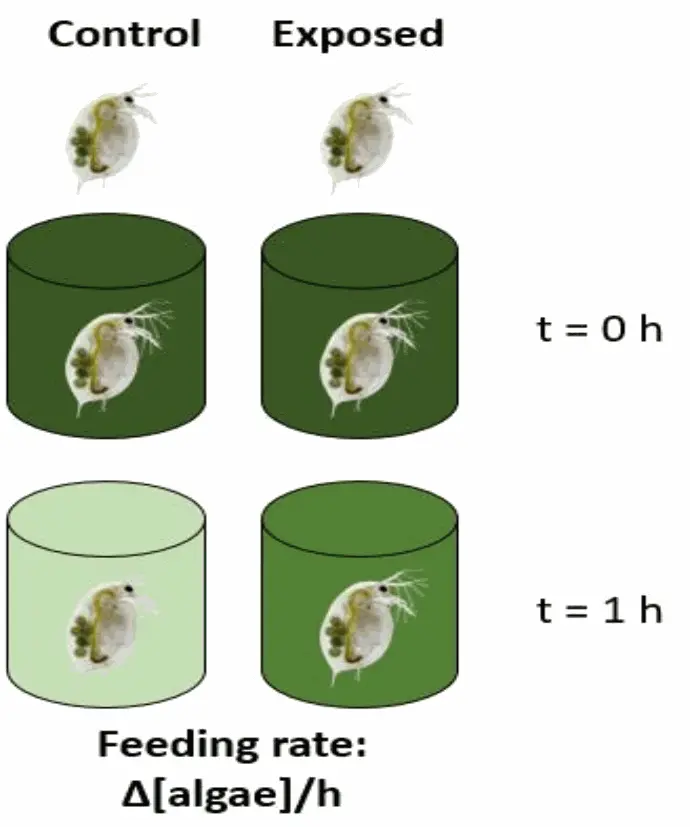
Abb. 1: Versuchsaufbau. Die Daphnien kommen in Wellplatten mit einer festgelegten Algenmenge. Nach ein bis zwei Stunden wird die Algenkonzentration erneut gemessen.
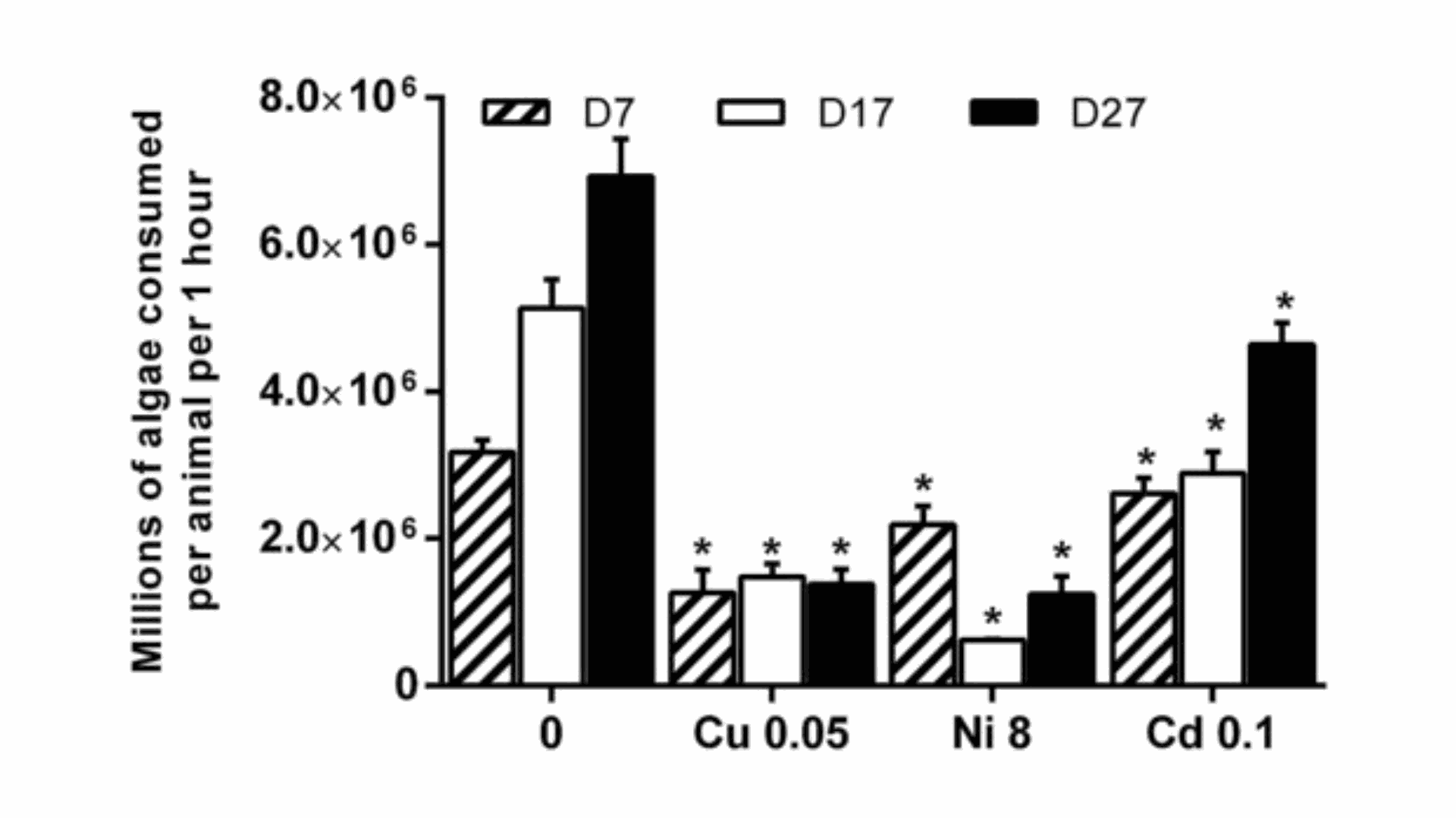
Abb. 2: Die Fressrate wurde an unterschiedlich alten Daphnien bestimmt, die 24 Stunden lang Metallstress ausgesetzt waren; gemessen wurde die Wirkung auf den Algenverbrauch. Angegeben sind Mittelwert ± Standardabweichung (n=5). *Statistisch bedeutsamer Unterschied zur unbehandelten Kontrolle, je Altersgruppe geprüft (ANOVA, p<0,05). Das Alter der Daphnien betrug 7 Tage (D7), 17 Tage (D17) und 27 Tage (D27).
Ergebnisse
Nach der Standardisierung haben wir mit dem Testsystem untersucht, wie Metalle auf die Fressrate wirken (Abbildung 2). Die Kontrolle (0) zeigt, dass die Fressrate der Daphnien deutlich mit dem Alter zusammenhängt. Nach 24 Stunden Einwirkung fällt sie bei allen untersuchten Metallen deutlich ab: Cu (0,05 mg/l), Ni (8 mg/l), Cd (0,1 mg/l). Im Verlauf des Wachstums fällt die Antwort auf die 24-stündige Metalleinwirkung je nach Alter verschieden aus (D7, D17, D27); bei den älteren Tieren waren die Veränderungen am größten.
Fazit
Die Fressrate ist eine wichtige Größe, um die Energieverteilung bei Cladoceren abzuschätzen; dieser Test kann gut zu toxikologischen Untersuchungen beitragen. Wir haben ein optimiertes, verkleinertes Testsystem für akute Toxizität und Algenfressmessungen an Daphnien entwickelt. Damit ist belegt, dass sich Daphnien-Toxizitätsprüfungen im Mehrfachwell-Format durchführen lassen. Der Test braucht weniger Zeit und Material als der herkömmliche Ansatz und liefert eine phänotypische Charakterisierung auf der Ebene des einzelnen Tieres.